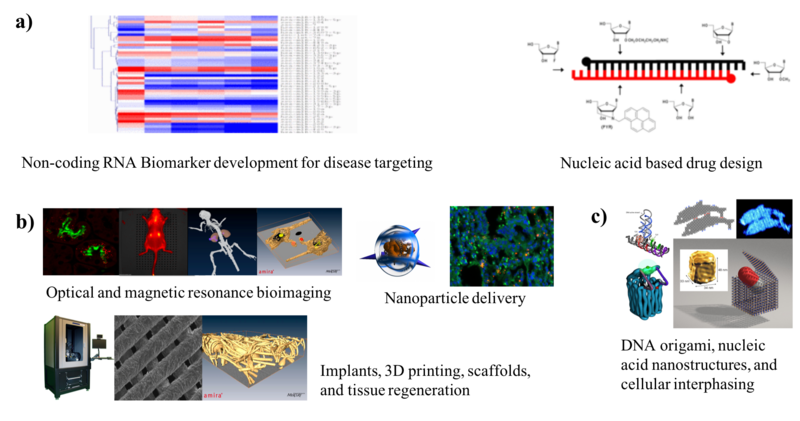
There are three main focus areas in the Kjems lab:
a) The understanding of how small non-coding RNA and circular RNA contribute to cell maintenance and disease development with a primary aim of defining new targets for disease intervention.
b) The creation of novel bioimaging and delivery systems for gene medicine including siRNA, miRNA mimics, antimiRs (antisense targeting microRNA) with a specific focus on inflammation, cancer, influenza, and regeneration of damaged tissue (tissue engineering).
c) Design and construction of functionalized self assembled DNA and RNA nanostructures capable of complex biosensing, coupled with controlled action e.g. drug release, enzyme activation, and receptor signaling.
In CellPAT, Jørgen Kjems contributes with key expertises in applied nanotechnology including biomolecular design, bioconjugation, cell delivery and tissue engineering as well as the more basic molecular biology fields of gene expression and cellular growth and development.