Aarhus University logo
Interdisciplinary Nanoscience Center
Internationally recognized Nanoscience center conducting science and educating Nanoscientists at the highest international level
Are you a future Nanoscience student?
Research within medicine, materials and food
Professor Troels Skrydstrup has been interviewed by Chemistry Views (Wiley) about his successful work in organic synthesis, organometallic chemistry, and especially running safe reactions with dangerous but very useful gases, like carbon monoxide and hydrogen cyanide. Hear about his research plans and why Denmark is a nice place to do research.
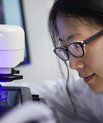
Associate Professor Menglin Chen has received a major grant from the Carlsberg Foundation to develop a completely new method of regenerating brain and heart cells. The method uses water-based nanofibers coated with organic photovoltaic nanomaterials to create light controlled neural stimulating scaffolds inside the body.
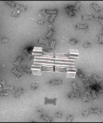
A scientific collaboration led by researchers at iNANO/Department of Molecular Biology and Genetics at Aarhus University and the Department of Chemistry at the University of Copenhagen has resulted in the construction of a synthetic DNA nanopore capable of selectively translocating protein-size macromolecules across lipid bilayers.
Page 86 of 165